Ordering business cards, menus, vinyl stickers, or banners from a quick-turn print shop is rarely a question of “can they print it?” The real difference comes from whether you can clearly confirm the proof, the file setup, and the production details that affect how your finished job looks in the real world.
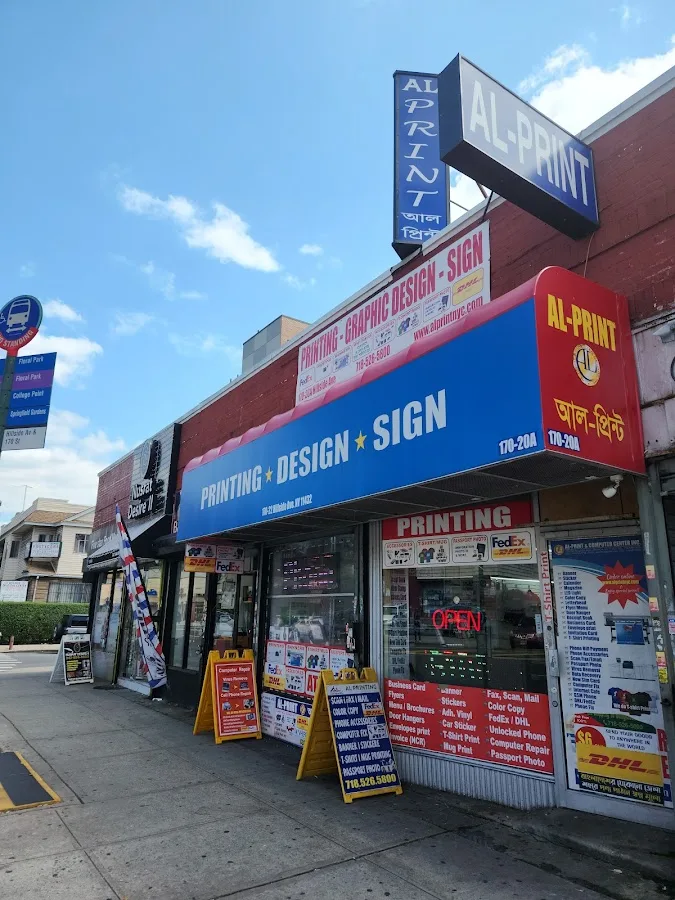
This guide walks through the conversations buyers should have with AL-Print, a print and design shop at 170-20A Hillside Ave., Jamaica, NY 11432, United States, reachable at +1 718-526-5800 and listed with its website at http://alprintnyc.com/. The goal: reduce surprises between artwork approval and pickup day, especially when timelines are tight.
Start with the proof scope: what exactly is being approved?
When turnaround is fast, the approval step becomes the last safety net. Before you sign off, ask the shop to confirm what the proof represents—especially for pieces like business cards and menus where small differences can be noticeable once trimmed and folded.
In the AL-Print workflow described on its site, buyers are guided through an ordering process that includes uploading print-ready files and then placing the order. That makes it even more important to define what “ready” means for your specific job.
Clarify proof items for your exact product
Use a simple checklist conversation:
- Trim and margins: confirm how the shop expects bleed, margins, and final trim to be set for your chosen size.
- Color-critical elements: if your logo is brand-critical, ask whether the shop matches a previous run, a reference standard, or the color targets in your file.
- Typography and layout: confirm that fonts are embedded or converted as needed, so the proof reflects the final output.
Match finishing and substrate to the way the job will be used
Two designs that look identical on screen can print differently once the shop applies real-world finishing. For example, menus and brochures often need readability under varied lighting, while vinyl stickers must tolerate handling and exposure better than flat paper.
Instead of asking only “what paper do you use,” ask how the finishing choices affect the final presentation:
- Business cards: ask whether the finish supports the feel you want (for example, how it will reflect light and whether it will reduce glare).
- Menus: confirm durability and how ink or coatings will hold up for repeated customer handling.
- Vinyl stickers: verify whether the intended surface and application match the sticker material and finishing approach.
- Banners: discuss how large-format printing will translate design elements from a file into a readable layout at viewing distance.
The editorial takeaway is simple: finishing isn’t an “extra.” It’s part of the production spec, and it should be decided before approval—not after.
Confirm deadline realism: approval timing and production flow
Quick-turn print shops can often move faster, but the schedule depends on your approval timeline and file readiness. Before you ask for the earliest possible pickup, verify how the shop handles the sequence from proof to production.
Ask how changes affect turnaround
One of the most important decision questions is what happens if you request edits after proof approval. Even a small change—like swapping a color value, adjusting a logo position, or correcting a name—can ripple into prepress time. Ask for clarity on:
- Whether the shop treats proof approval as a “lock” point
- How last-minute edits are handled for your product category
- Whether pickup timing assumes you approve by a certain deadline
This is where you protect your internal schedule: marketing teams, event teams, and sales teams often build campaigns around a print pickup date, so production assumptions should be confirmed early.
Bring print-ready files that match prepress expectations
File readiness is the fastest path to smooth production. AL-Print’s site emphasizes uploading print-ready files as part of its ordering flow, so buyers should treat file setup as a production input—not an optional detail.
To reduce the risk of delays or mismatch, prepare your files with these principles:
- Use the final document size for business cards, menus, and other trimmed products (don’t rely on the shop to “scale” later).
- Set bleed and safe zones according to the shop’s requirements for your specific dimensions.
- Send high-resolution image assets appropriate for the final print size, not just “good-looking” screen previews.
- Double-check black text and dark elements so they print with the contrast you expect.
If you’re unsure, request the shop’s file specifications before upload. A small back-and-forth can prevent a bigger correction later.
Finalize the order conversation: quantities, pickup, and handoff details
Once you’ve aligned proof scope, finishing, and file readiness, confirm the operational details that affect day-of handoff. For a shop located at 170-20A Hillside Ave., Jamaica, NY, buyers often want practical clarity on how the order becomes ready for pickup.
When you place the order, confirm:
- Whether pickup is available as scheduled after approval
- How the shop communicates proof status (so you don’t miss the decision window)
- What information you should reference in case you need to confirm your order
For deadline-driven marketing materials—especially business cards, menus, vinyl stickers, and banners—this sequence turns a “fast print order” into a predictable production outcome: proof scope first, finishing tied to use, file setup aligned to prepress, and timing confirmed before you depend on the pickup date.