
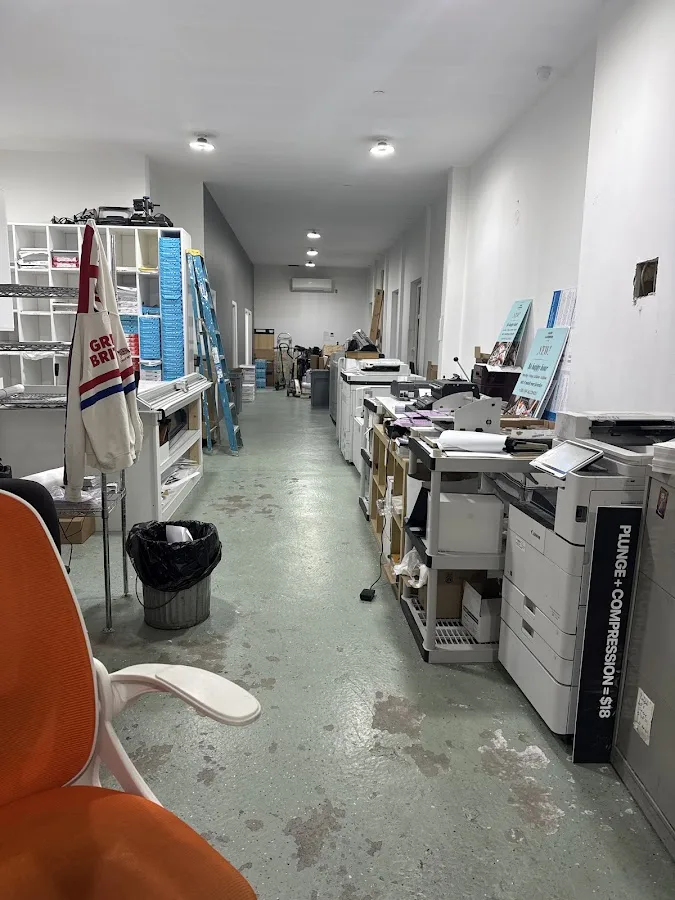
Ordering business cards, flyers, or posters is easy to think about until you hit the part of printing that actually determines quality: whether your artwork is set up correctly, whether the shop’s proofing matches what you will approve, and whether the timeline is realistic for your exact finish. Printing Garage (Internet Garage) is a quick-turn print shop in Brooklyn with an official website that states it is located on Bedford Ave in Williamsburg and offers multiple-format printing (including digital and offset). The address and phone number are also clearly provided—use those details to confirm your job before you send the “final PDF.”
If your project is deadline-sensitive, the smartest way to judge a print shop is to treat your order like a production handoff. Below are the checks that keep turnaround fast and help you avoid expensive rework.
Start with the hard facts: location, contact, and what “quick-turn” means for your job
Printing Garage lists 334 Bedford Ave, Brooklyn, NY 11249, United States and a direct phone line at +1 718-486-0059. Before discussing design details, call or message to verify how their quick-turn process works for your specific product (for example, cards vs. banners) and where proof approval fits into the schedule. The shop’s website also points to http://www.internet-garage.com/, which can be a useful reference point when you’re asking about the exact deliverables.
Quick-turn typically fails when the quote timeline assumes one set of specs and the final files you send do not match that assumption—wrong trim size, missing bleed, or a finish that requires an extra step.
Confirm proofing that matches your approval moment (and your bleed/trim expectations)
Proofing is where most “we didn’t get what we approved” issues start. Ask what kind of proof you will receive and what they consider “approved.” For a print order, you want confirmation that your approved proof includes the correct bleed, trim, and safe margins for the size you are ordering. Even if your design looks fine on-screen, finishing and cutting can reveal problems once paper size and layout constraints are applied.
Also ask whether proof approval changes the timeline. If proofing happens after production begins, your ability to correct problems may be limited. A good sign is when the shop can clearly connect your proof approval to a production checkpoint.
Bring your file specs into the conversation, not just the final artwork
When you call, include the practical details that printers use to lock in production: intended trim size, quantity, whether you need bleed, color mode expectations (so you don’t get surprises in output), and any finish requirements. If you’re unsure about the right setup, ask whether they can review your files for print readiness before they quote final timing.
Match the quote to the deliverable: finishes, stock, and “what’s included”
Printing is more than ink on paper. Ask what the estimate includes for your specific job: paper/stock choice, surface finish, and any finishing steps like folding, binding, or cutting tolerances (depending on the product). The official site describes Internet Garage as a multiple-format print shop and indicates it does work ranging from business cards to promotional materials and large-format items—so your quote should reflect your actual product category, not a generic “print job.”
One useful way to keep scope clear is to ask them to restate what will be delivered: the final count, the exact finished size, how packaging happens, and how pickup is coordinated.
Build a timeline around production reality: file readiness → proof approval → print → pickup
For deadline-driven jobs, treat the order like a sequence. First, your files must be production-ready. Next comes proof approval. Then the shop prints and finishes. Finally, pickup or delivery needs to be scheduled. If any one step is delayed—often proof review or missing file setup details—the whole job can slip.
When you’re ordering from a quick-turn shop, ask for the checkpoint dates they are using internally (even if they cannot guarantee everything). The goal is not perfection; it’s alignment between your launch schedule and their production workflow.
Ask one specific question that reveals operational clarity
Try this: “If I send production-ready files today, and I approve the proof promptly, what date do you expect the finished items to be available for pickup?” Their answer will tell you whether they understand your product constraints—or whether they are estimating based on assumptions.
Use the shop’s public information to verify you’re speaking with the right partner
Before you place an order, double-check you’re working with the correct business record. Printing Garage provides a clear address and phone number, and its official website highlights multiple-format printing and a Williamsburg Bedford Ave location. Using those concrete signals makes it easier to avoid misunderstandings with anyone else who might offer “similar” printing services.
For quick-turn printing, the winning approach is simple: confirm proofing and file readiness up front, align the quote to the exact deliverable (including stock and finishes), and schedule around proof approval. That’s how you keep speed without sacrificing accuracy.