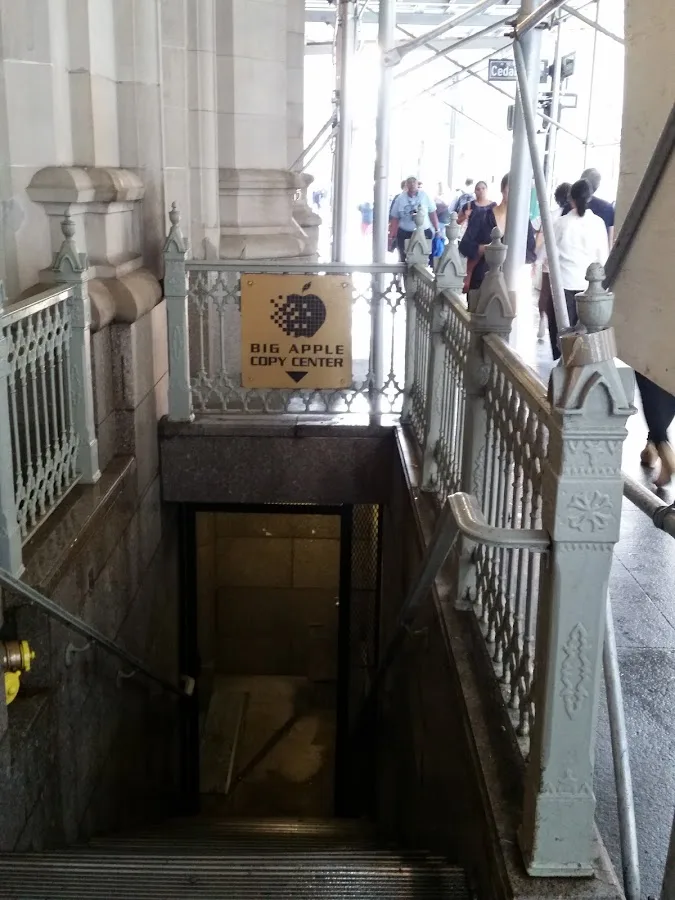
When you’re getting something printed in New York, the difference between “looks fine” and “looks right” is often in the details—especially your files and your final display needs. Big Apple Copy Center, located at 160 Broadway, New York, NY 10038, is a graphic design and print studio where clear inputs and thoughtful proofing help avoid surprises.
If you’re working with a specific output size—like a piece meant for a wall, window, or event display—start by defining the finished product in plain language. Bring the goal and context with you, not just the source artwork. Are you trying to match a particular look for signage, a presentation, or a campaign? Laying that out early makes the rest of the process smoother.
Bring print-ready clarity: formats, inputs, and what you want printed
Before you submit anything, verify your file formats and the inputs match what your job needs. Different print outputs depend on how the artwork is structured, so it helps to confirm what you’re providing (for example, whether you have a ready-to-print layout rather than a collection of elements). If your project is for a banner, poster, or other large display piece, treat the finished dimensions as part of the job—not an afterthought.
At Big Apple Copy Center, the key is alignment: your intended size, how the piece will be displayed, and how you want it to appear when it’s printed. That’s also why communicating your display context matters—distance, placement, and orientation can all influence what “done” looks like.
Think in final dimensions—especially for large format
For larger-format work, confirm the piece dimensions and how the graphic will be presented. A design that’s built to one aspect ratio won’t behave the same way when it’s stretched or cropped for a different space. If you already know where it will hang or how it will be viewed, share that information so the print production can be set up accordingly.
If you’re unsure of how to translate your idea into a final size, starting with a simple statement—finished dimensions plus placement—goes a long way. It keeps the conversation anchored to the outcome you want to hold in your hands.
Proofing and revisions: ask for clarity, not reassurance
Even with strong files, proofing is where the job becomes truly final. Rather than treating proofs as a formality, use them to confirm details that affect the finished result. When you review a draft, focus on clarity: double-check text legibility, alignment, and any elements that could shift between versions. If something feels ambiguous, ask targeted questions so revisions address the specific issue—not just the general concern.
For a quick way to connect with the studio, you can call +1 212-962-4282 or visit http://www.bigapplecopy.com/ to learn more about services and next steps.
Choose the right job goal before you refine the file
The fastest way to reduce back-and-forth is to decide what you’re making first. Start by describing the finished product in plain language, then match your file preparation to that target. When your output size, display needs, and proofing questions are all clearly defined, your print job is less likely to stall—and more likely to come out exactly as expected.
Whether you’re preparing a standard print or planning a large-format piece, taking the time to verify file formats and confirm dimensions can protect the quality of your design. Big Apple Copy Center’s downtown location at 160 Broadway, along with their focus on graphic design and print production, makes it a practical place to bring a clear brief and get to a confident final.