Choosing a local print and graphic design studio is rarely about picking the most impressive slogan. It’s about whether the shop’s workflow matches your project’s reality—how your artwork is set up, what needs to be approved before production, and which deliverables you’re actually trying to produce.
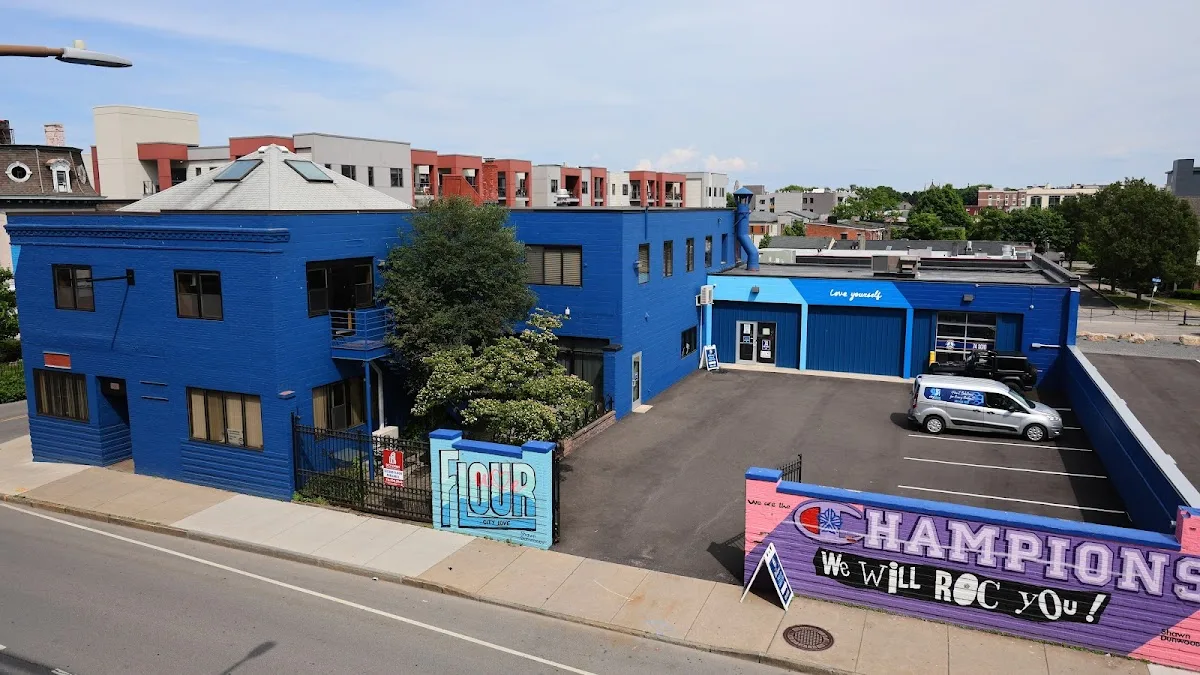
For City Blue Imaging in Rochester, NY, the visible details are clear: the studio lists its address at 84 Scio St, Rochester, NY 14604, United States, provides a direct phone line at +1 585-454-1695, and points customers to its official services site at https://www.cityblueimaging.com/. That gives you a good starting point for confirming whether their print, design & layout capabilities align with your timeline and deliverable requirements.
Start by matching your deliverable to what the studio advertises they prepare
City Blue Imaging’s website organizes services around real production categories rather than vague “we do it all” language. The site highlights design & layout print services and a set of project types such as office materials, marketing collateral, signs and banners, special events and mail services, and blueprint-related services. In plain terms, this means you’ll want to begin your first conversation by naming your finished deliverable—not just your industry—and ask what they do on their side to get it print-ready.
When you call or submit a file, bring a clear statement like: “I’m printing X (poster, banner, or set of collateral), and I need Y (dimensions, finishing, and color-accurate proof approval).” If you hear an answer that stays at the level of “we print marketing materials” without describing the preparation step, that’s a cue to push for specifics.
Use the proof conversation to test accuracy (before you approve anything)
For most projects, the “proof” step is where schedules are saved—or where reprints happen. Even when a studio can produce a file, proofing determines how closely the final output matches what you approved.
Ask City Blue Imaging what proof they provide for your type of job and what the approval process looks like:
- What exactly is being approved (layout, text, colors, bleed/crop, and any finishing marks)?
- How changes after approval are handled (what triggers rework and how that affects turnaround)?
- What file setup they need from you (for example, whether they rely on you for final dimensions and image resolution, or if they do layout adjustments as part of the service).
This is also where you can confirm their practical workflow using your own materials. If you can describe your file type (PDF, AI, or image-based) and your key constraints (brand colors, small type, or exact trimming), the studio’s response will quickly reveal whether they can support your project at the level you need.
Check that your timeline expectations match a real production flow
City Blue Imaging’s online contact area includes business hours and standard contact paths (phone and website). That’s useful, but the more important part is aligning your deadline with the production sequence you’ll actually experience.
Ask two timeline questions that force clarity:
- When does production start relative to proof approval?
- Where delays usually come from (file revisions, color checks, finishing complexity, or shipping/coordination)?
If the studio can’t connect “proof approval” to “production start,” you may want to plan for extra time—or choose a different shop whose process is easier to forecast.
Confirm finishing and format details for signs, banners, and collateral
Signs and banners often look simple until you’re dealing with finishing, mounting, or how the artwork is treated across different sizes. For marketing collateral, the risks are typically typography legibility, image clarity, and consistent color from one piece to the next.
For City Blue Imaging, it helps to ask how they handle practical production decisions for your specific category:
- For wide-format items: what file dimensions they prefer, and whether they review bleed and safe zones.
- For promotional print sets: how they keep sizing, margins, and typography consistent across multiple SKUs.
- For mailed or event-related materials: what assumptions they make about addressing, inserts, and packaging if that applies to your job.
By keeping these questions concrete, you avoid getting generic answers that don’t help you predict the final result.
Make the decision with a simple “match test”
After your first discussion, you should be able to answer: “Does their workflow explain how they will turn my design into a finished piece that matches what I approve?” If you can identify the proof step, the file readiness expectations, and how production follows approval, you’re making a decision based on process—not marketing.
For City Blue Imaging, the public signals (address, phone, and a service menu that includes design & layout, signs and banners, marketing collateral, and mail-related services) are enough to support a thorough qualification call. Before you place an order, ask them to walk through how your specific deliverable will be prepared, proofed, and produced—then compare that workflow to your project’s constraints.