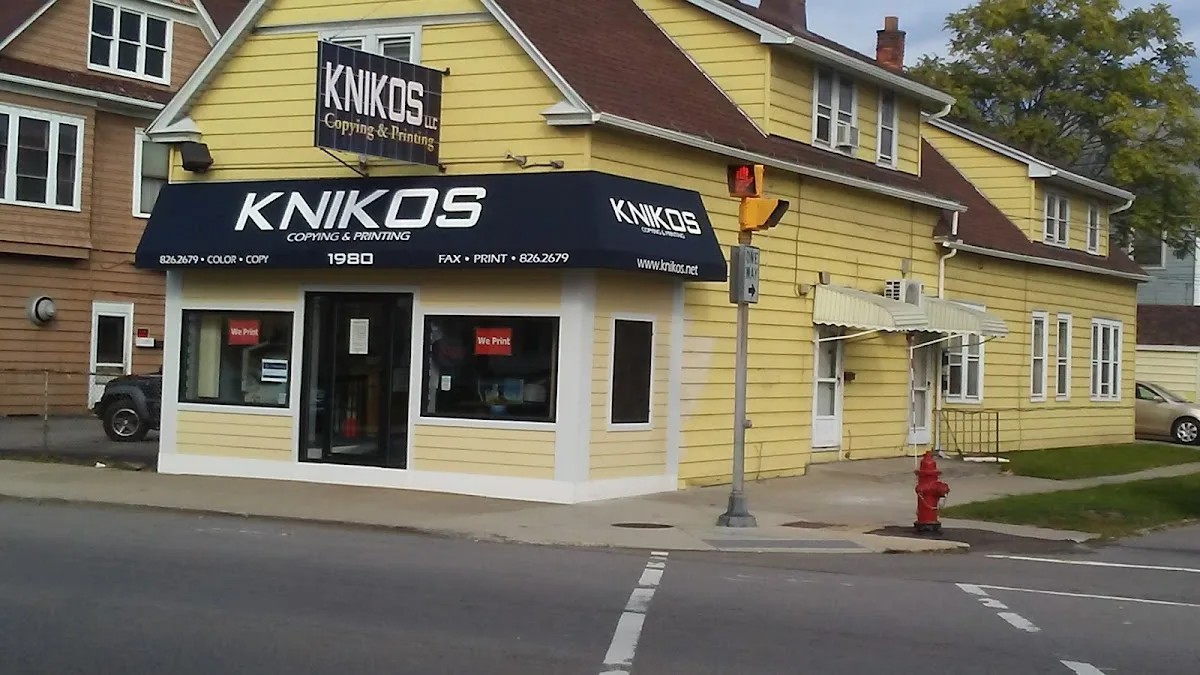
Choosing a print shop is usually framed as “who prints the best.” In practice, the winning move is aligning on one question: what exactly is the finished deliverable—and how does proof approval map to that finish? Knikos Copying & Printing, located at 1980 Clinton St, Buffalo, NY 14206 and reachable at +1 716-826-2679, offers a broad set of print and design services, so the work is making your scope precise before you approve anything.
Start by writing your project as a finished deliverable
Instead of saying “we need printing,” define the end product you will judge when it arrives. For example: business cards, flyers, window stickers, banners, posters, or brochures each have different expectations around size, bleed, and finishing. Knikos’ public service menu points to items like color copies, brochure printing, menu printing, banners, window stickers, and business cards—so it may be capable of supporting multiple formats. Your job is to describe the deliverable you actually need, in the exact terms you will use to approve the proof.
Turn vague requests into proofable specs
Before you ask for a quote, convert your needs into confirmable details: finished dimensions, number of pages (for multi-page pieces), single- vs. double-sided layout, and whether you need a gloss or matte presentation effect. Even when a shop offers many products, you’ll get better answers when you request the specific output you’ll use for customers, promotions, or internal documentation.
Confirm file readiness so the proof reflects your intent
Proofs only reduce risk if they’re based on correct input. Ask what file setup they expect and what they can fix versus what they need from you. In a print workflow, common trouble spots include embedded fonts, image resolution, and color handling. If you’re preparing artwork for business cards, marketing flyers, or banners, request the shop’s preferred dimensions and any bleed or safe-area guidance so the proof shows the final crop and placement—rather than revealing issues after production.
Ask what “print-ready” means for your format
For example, a window sticker often depends on scaling and cutting proportions, while brochure work depends on correct page order and fold planning. When you align the “print-ready” definition with the format, you reduce the chance that approval becomes a debate over whether the artwork was set up correctly in the first place.
Define proof approval as a versioned decision
One of the most practical questions you can ask is what proof approval actually triggers. Will you see a digital proof for layout only, or one that represents final color expectations? When revisions are requested after proof review, confirm whether they create a new proof version and what information is carried forward. Because deadlines matter, you also want a clear timeline for how quickly edits move from approved proof to production.
Connect revisions to your deadline
It’s not enough to say “we can be fast.” Ask the shop to explain the sequence after approval: how changes are submitted, when the revised proof returns, and when production begins. That approach turns proof approval into a predictable decision—not a last-minute scramble.
Clarify finishing, bindings, and large-format needs
Knikos’ website mentions binding and laminating needs alongside a range of products, including posters and lawn signs, plus custom vinyl banners with seamless options for indoor and outdoor use. If your job depends on a particular finish—like mounting, lamination, or banner format—make it part of your scope request. Describe what the piece must withstand (handling, display conditions, and expected viewing distance) so the quote includes the relevant finishing.
Use the contact path to verify the final deliverable
Public listings are helpful, but the decision happens through confirmation. With Knikos, you can start at their official website, http://www.knikos.net/, and include your deliverable definition in your message. Before you commit, ask them to restate: what file they will print from, how they will handle proof approval, and what “finished” means for your specific product (cards, stickers, brochures, banners, or menus).
If you treat proof approval as a versioned step and you request a deliverable spec your project can be measured against, you’ll reduce reprints and mismatched expectations. That’s the practical way to choose a print and design partner—especially when the shop offers many different formats, like Knikos does.