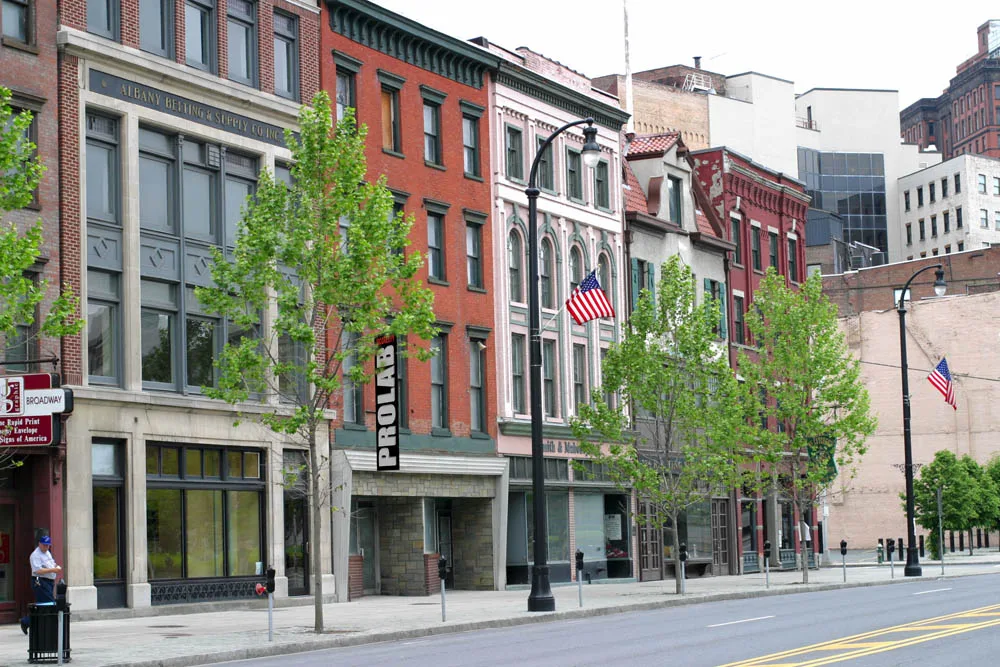
Ordering photo prints, business cards, or press jobs gets smoother when you treat the shop like a production workflow—not just a place to upload a file. For McGreevy ProLab & ProPress in Albany, the biggest difference maker is how your files become production-ready and how the proof you approve connects to the final piece.
Choose the right lane: photo lab vs. press printing
McGreevy ProLab & ProPress describes two main lanes: professional photo lab services and press printing. Public details also mention photo prints on Fuji Crystal Archive paper and in-house printed/bound photo books, while the press side lists offerings like business cards and “prints.”
That split matters because your questions should match the output. Before you design or upload, confirm whether you’re ordering primarily a photo output (paper stock, color-critical images, archive expectations) or a press output (layout, bleed/crop, and text/typography fidelity).
Photo print expectations: proofing and Fuji Crystal Archive paper
For image-heavy photo orders, the fastest route to fewer mistakes is to make sure your proof matches photo production settings. McGreevy ProLab & ProPress lists an online ordering and upload workflow, so it’s worth asking what “proof” means in their process.
Ask whether the proof is a soft proof, a test print, or a preview generated directly from your file data. If you’re ordering images with typography (common in business cards and marketing pieces), ask them to confirm two areas shown clearly in the proof: color handling (including skin tones and dark backgrounds) and text rendering (small fonts, thin lines, and borders).
The shop’s site references Fuji Crystal Archive paper with a long archival rating. Even if you don’t memorize the rating, use it as a signal that paper choice is part of their value proposition. If longevity matters for your project, ask whether the same Fuji Crystal Archive paper is used across photo print sizes and finishes, and whether any finishing steps change the final look.
Press file fit: bleed, crop, and how they evaluate resolution
For press printing, “file fit” is where issues tend to appear. Even if your design looks correct on-screen, your final results depend on how the shop interprets margins, bleed, and crop marks.
Ask whether they want bleed settings included in your file and what export standard they prefer (for example, PDF/X or another option they specify). Then confirm image resolution expectations in the context of your deliverable. A flyer with full-bleed photography won’t tolerate the same file compromises as a simpler card that’s mostly vector text.
Submitting artwork: use the upload method that reduces missing or downscaled files
McGreevy ProLab & ProPress mentions multiple ways to submit artwork and photos, including an online upload approach and email attachment limits, as well as other digital submission options. If your order includes high-resolution images or multiple variations, ask which submission method best preserves image size and reduces the risk of downscaled files or missing uploads.
Timing and revisions: align turnaround with proof approval
Public hours of operation are listed for Monday through Friday (with a later evening window on Wednesday), with weekends and holidays closed. If you need a quick turnaround, don’t plan only around the day you send the file—plan around proof timing and any submission cutoffs they require.
To keep deadlines protected, clarify revision expectations before you approve. Ask what happens if you request changes after proof approval: do they re-run from the approved proof, or do you need a new approval cycle? A clear answer helps prevent “small edits” from turning into production delays.
Quick facts to ground your order: McGreevy ProLab & ProPress is at 376 Broadway, Albany, NY 12207. You can reach them at +1 518-426-1039 or via http://mcgreevyprolab.com/. Use these details to confirm your scope (photo vs. press), proof workflow, submission method, and file requirements before placing the order.
If you’re aiming for a fast turn order, send one concise message that includes what you’re producing (photo prints, business cards, or press “prints”), which elements matter most (Fuji Crystal Archive paper for photo work, bleed/crop and text fidelity for press work), and what proof and file-fit checks you want confirmed—then approve the proof with confidence that it maps to the finished output.