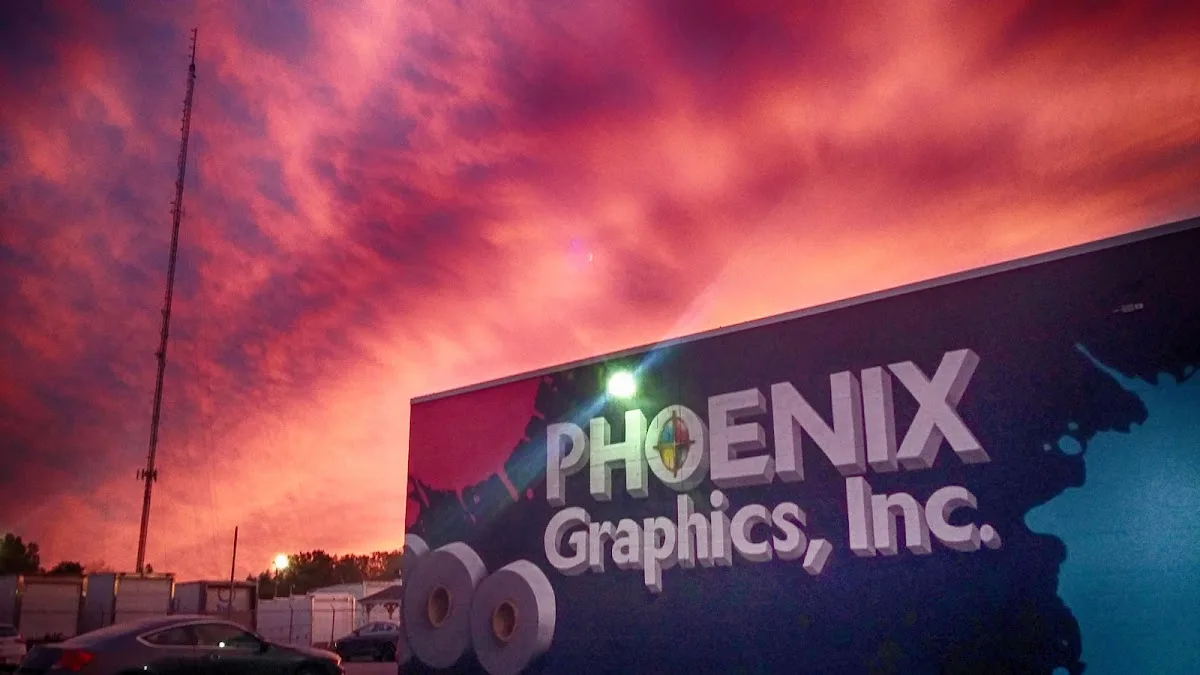
Picking a local commercial printer gets easier when you match your project to the shop’s stated strengths. For Phoenix Graphics Inc in Rochester, NY, the public signals are especially specific: their website positioning highlights ballots, direct mail, and commercial print solutions. If your project involves structured printing where accuracy and repeatability matter, Phoenix Graphics is worth a targeted fit-check before you upload files or approve proofs.
This is not a generic “printing guide.” It’s a decision aid for confirming whether Phoenix Graphics’ workflow assumptions align with your deliverable—so you can reduce the odds of avoidable rework after approval.
Start with the deliverable category that matches their stated focus
Phoenix Graphics’ positioning points most directly to elections printing and direct mail, alongside broader commercial print work. That matters because these categories typically demand disciplined handling of content, layout, and production execution. If your order involves multiple pieces or campaign-style deliverables—rather than a single simple flyer—your project is more likely to align with what the shop signals it does well.
When you reach out, name the finished item you need (for example: a ballot-related piece, a direct mail mailer, or another commercial collateral format) and ask which part of the job tends to be most “critical” in their workflow: proof accuracy, layout handling, or how they manage production after approval.
Confirm proof fundamentals: files, dimensions, and approvals
Even if a printer is experienced, your input still determines whether the final job looks right. Ask Phoenix Graphics what they require for reliable proofing and press-ready production. In particular, clarify preferred artwork/file preparation expectations (including whether bleed/crop marks are needed), and how they handle fonts and image resolution so you know what “good to print” means in their process.
You’re looking for answers that are specific enough to guide decisions. If their expectations are detailed—formats, margins, and proof behavior—that’s a good sign. If they’re vague, ask for the actual proof workflow details for your deliverable so you can prevent surprises later.
Use the Rochester contact facts to speed up your first call
Phoenix Graphics Inc is publicly listed with a Rochester address and direct phone contact: 1525 Emerson St, Rochester, NY 14606, United States and +1 585-232-4040, with an official website at https://phoenix-graphics.com/. Having these details ready helps you call with context rather than starting from scratch.
Before you talk, assemble your key inputs: the quantity you need, the final sizes of the finished piece(s), and your target deadlines. If timing is tight, ask how production proceeds after proof approval so you can understand when changes become risky for your schedule.
Ask about the proof workflow to understand reprint risk
A common source of problems in print orders isn’t the printing itself—it’s the approval step. Before you sign off, ask Phoenix Graphics to describe their proof workflow in plain language. Specifically, try to confirm:
- What they review in the proof (layout, content, and other job-relevant elements)
- Whether you receive a digital proof, a hard proof, or both
- How revisions are handled after a proof is approved
Because Phoenix Graphics is positioned as a commercial printer focused on ballots and direct mail, this question helps you test whether they behave like a workflow-driven shop—where approval steps are clearly defined—or like a process that leaves too much for “later.” In a fit-check, you should be able to identify what triggers reprint risk and how the shop prevents it.
Match your scope to what the shop appears to handle: commercial + direct mail
If your project aligns with direct mail or elections-style printing, Phoenix Graphics’ stated categories can be a practical match. Their messaging emphasizes “direct mail services” and elections printing, both of which typically involve precision in reproduction and consistent execution.
To verify alignment, describe your deliverable in terms of usage and constraints: how it will be used, whether readability depends on specific formatting rules, and whether the job is a one-off piece or part of a larger campaign. Then ask what details they need up front to run it smoothly (for example, what they require to prepare the print files correctly and how they handle the information variations inherent in structured mail or election-related work).
Decide based on how clearly they drive the conversation toward deliverable readiness
A strong fit is often visible in the questions Phoenix Graphics asks you. During your first conversation, you want them to probe for the information that determines final output—not only ask for quantity. If they quickly clarify file expectations and what the proof process covers, that’s a decision-friendly sign for commercial work where accuracy matters.
Make the final call: confirm the deliverable definition before you approve
Before placing the order, verify that you and Phoenix Graphics are aligned on the deliverable definition: the exact size, the expectations around paper/stock and finishing as applicable to your project, and the timing around proof approval so your deadline is protected. If you can lock those points down, your risk drops—regardless of which printer you choose.
Phoenix Graphics Inc is listed with Rochester contact details and an official website that emphasizes ballots, direct mail, and commercial print solutions. If your project involves structured printing where proof discipline matters, use this fit-check—starting with workflow questions that prevent rework—to move forward with confidence.