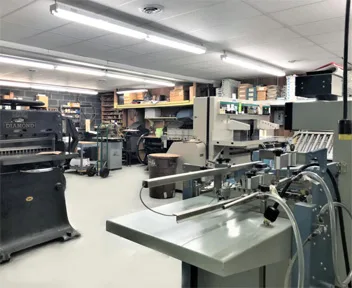
When you’re getting flyers, brochures, or business forms printed, your biggest wins usually come from two decisions: what you’re printing (and how visually exact it must be) and how carefully you approve the proof. Tri-Kolor Printing & Stationery, a commercial printer in Syracuse, helps clients move from ready artwork to confident approval for production.
Match the print type to the level of accuracy you need
Different pieces require different priorities. For flyers and brochures, color consistency is often what determines readability and the way your brand feels on the page. For business forms, legibility and layout clarity typically matter most—especially when the design is structured and elements must remain properly aligned across the full page.
If you’re not sure where your job falls on that spectrum, it’s worth asking which details will most affect the outcome. In most cases, the printer’s guidance will point you back to file setup and the proof you choose to approve.
Review file details so your proof reflects the real artwork
A proof is only useful if it’s based on the version of the artwork you actually want. Before you send anything for production, review the source file for completeness and readiness. This is where you confirm that the final artwork is exportable in the format expected for your run and that key elements are placed the way you intend across the full page.
Because Tri-Kolor Printing & Stationery is located at 1035 Montgomery St, Syracuse, NY 13202, United States, you can also align on project specifics by phone at +1 315-474-6753 if you’d rather discuss your files and approval steps directly.
Use proof approval to confirm color, text, and positioning
The proof approval step is where you verify more than just image quality. For brochures and flyers, double-check that text remains readable at the intended size and that colors appear consistent with your expectations. It’s also smart to confirm that layout elements are positioned correctly for the final trim area.
For forms, the goal shifts to accuracy in the printed structure. Check spacing, alignment, and legibility—particularly if your design includes multiple fields or repeated elements. Make sure nothing looks cut off or distorted in the proof, because that’s exactly what would carry into the production run.
Define what “finished” means for your specific job
Not every print project needs the same kind of finishing confidence. Think about where and how the piece will be used. If your flyer or brochure must look polished right away—whether it’s handed out at an event or placed where customers will notice it—your approval should emphasize how the proof presents color and clarity. If your business forms are used day-to-day, your approval should emphasize how clearly the printed text and structure come through in the proof.
In practice, this means treating the proof as the final checkpoint: confirm the details that affect how the piece will be read, used, or noticed in the real world.
Verify project specifics before you commit
Tri-Kolor Printing & Stationery operates as a commercial printer, and you can review general information through its official website at https://tri-kolorprt.wixsite.com/website. If you’re deciding between flyer, brochure, and form production, use the website and direct communication to confirm what’s included in your project workflow—especially around proofing and the details that can affect how your files print in the final run.
When you’re preparing your next Syracuse print job, keep the decision process consistent across all piece types: start with what you’re printing, confirm the file details, review the proof carefully, and approve based on your real requirements. For flyers and brochures, focus on color-critical presentation and readability. For business forms, focus on reliable legibility and accurate alignment.
Make approval the last step before production
Once you’ve verified file readiness and checked the proof for color, text, and positioning, approval becomes your final quality gate. That’s how you reduce surprises and make sure the finished flyers, brochures, or business forms match what you envisioned—whether you’re coordinating through the phone line at +1 315-474-6753 or reviewing details online.