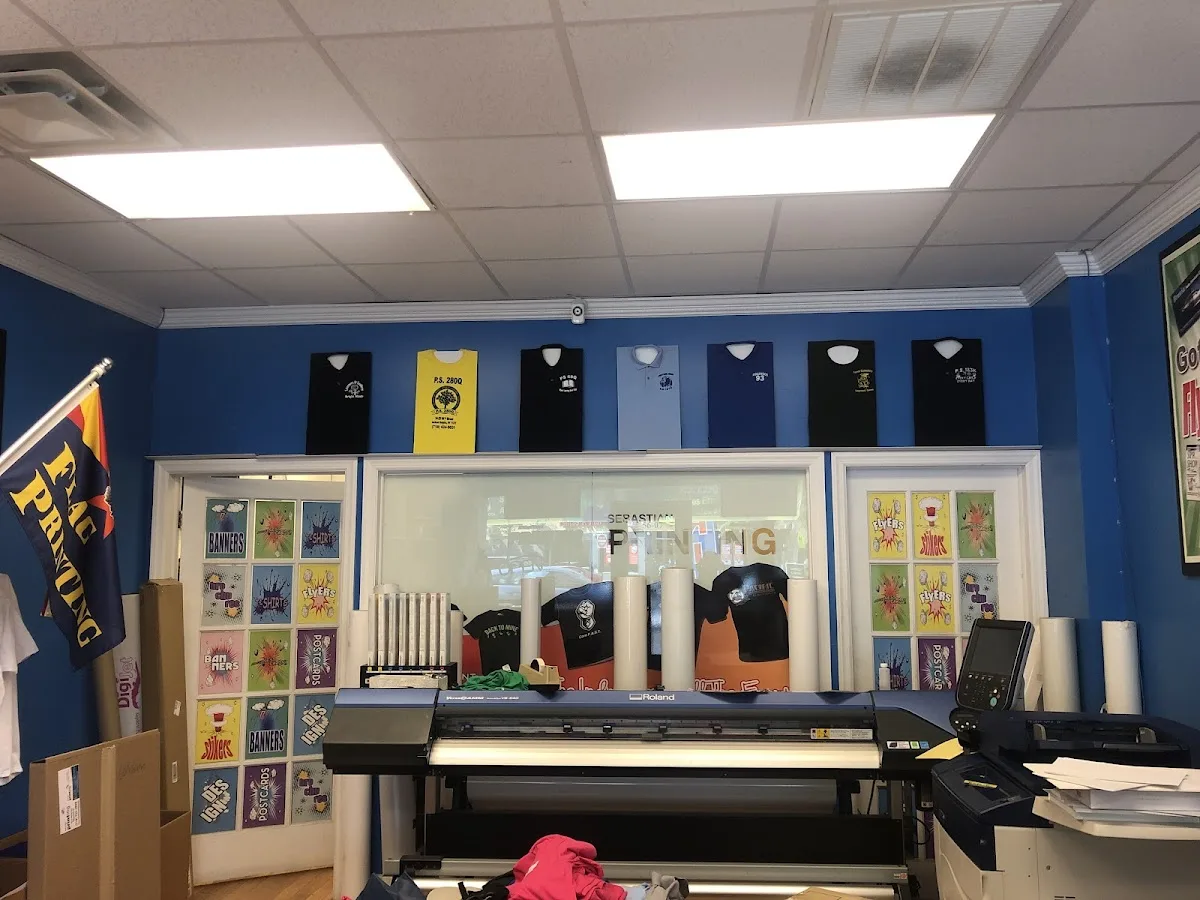
Ordering print from a graphic design and print studio is never just a matter of “can they print it?” For Sebastian Printing in Ridgewood, Queens, the smarter approach is to verify how your job moves from your artwork approval to prepress and final production. That’s especially important if your deliverables include logos, color-critical signage, or marketing pieces where small differences in bleed, fonts, or sizing can create expensive reprints.
Start the conversation with the proof you will actually approve
Before you commit, ask what your “proof” includes and what format you’ll review (for example, a visual preview of layout, color, and finishing). A useful rule: request that the proof shows the same geometry you will get in production—final trim, any bleed treatment, and how text sits relative to the safe area. If your project is logo-led (instead of text-heavy), also confirm that the proof reflects the final logo artwork—not a placeholder or an earlier export.
Confirm color-critical details: fonts, black, and file setup
Proofs are only as reliable as the input files behind them. Sebastian Printing is a Graphic Design & Print Studio listing, so you should expect a workflow where file readiness affects turnaround and output consistency. Provide fonts as outlined vectors when possible, or ask whether the studio expects fonts as editable text. Also clarify how your “black” will be built for your specific product—100% black versus rich black—so large areas of type or blocks don’t look washed out or uneven.
If you’re unsure about what to send, the practical move is to request a short checklist for your exact job type (logo print, signage, flyers, and similar pieces). That prevents the most common failure mode: getting a proof from the shop, realizing the output won’t match because the artwork needed last-minute cleanup.
Ask about proof adjustments that are realistic for the timeline
Some edits can be quick (swapping text, fixing a minor spacing issue), while others require deeper rebuilds. When you request the proof, ask which changes are handled easily before production begins and which changes can trigger delays or additional charges. This is where it helps to plan your review timing around deadlines rather than treating proof approval as an afterthought.
Verify product fit: sizes, finishing, and production constraints
Not every print job is created equal. If your deliverables include signs or larger-format pieces, confirm the production constraints early: the maximum workable dimensions for your file, how the shop handles margins and bleed for that product, and what finishing expectations (such as trimming or other surface treatments) your proof will reflect. You want the shop to tell you whether a spec you have in mind is standard, available, or needs adjustment.
Also ask how the studio handles artwork that was designed for a different size or aspect ratio. Reformatting late often affects kerning and line breaks, especially for brand marks and small typography on logo applications.
Use the Ridgewood contact details to confirm scope before you order
To avoid mismatches between expectation and output, use direct contact to lock scope. Sebastian Printing is listed at 56-07 Myrtle Ave, Ridgewood, NY 11385, United States and can be reached at +1 718-724-3888. Before you finalize your order, mention exactly what you’re producing, how many copies you need, and what “approval” means for your workflow—so you both agree on what will be measured in the proof stage.
For example, if you care about crisp logo edges or exact color appearance for a sign, say so and ask how the proof will represent those priorities. That way, the proof becomes a decision tool—not just a preview.
If you take one step before you hit “send,” make it this: confirm the proof process, confirm the file setup expectations, and confirm the production specs that affect trim and color. With that done up front, your artwork approval becomes smoother, your timeline becomes more predictable, and your final print output has a better chance of matching the brand you intended.